
Event Tips
What Tables Fit Eighty Guests? Seating Guide
Eighty guests can feel like a simple number until you start placing tables on a floor plan. The answer to what tables fit eighty guests depends on more than chair counts: your meal style, room dimensions, serving needs, dance floor, and the amount of space guests need to move comfortably all matter. A polished event layout gives guests room to settle in, servers room to work, and the host room to enjoy the occasion.
For most weddings, celebrations, and corporate dinners, start by deciding whether you want guests seated at round tables, rectangular banquet tables, or a combination of both. Then build in space for aisles and key event areas before finalizing your rental order.
What Tables Fit Eighty Guests Comfortably?
The most common seating plans for 80 guests are 10 round tables that seat eight, eight larger round tables that seat 10, or 10 rectangular 8-foot banquet tables seating eight each. Each option creates a different atmosphere and uses the room differently.
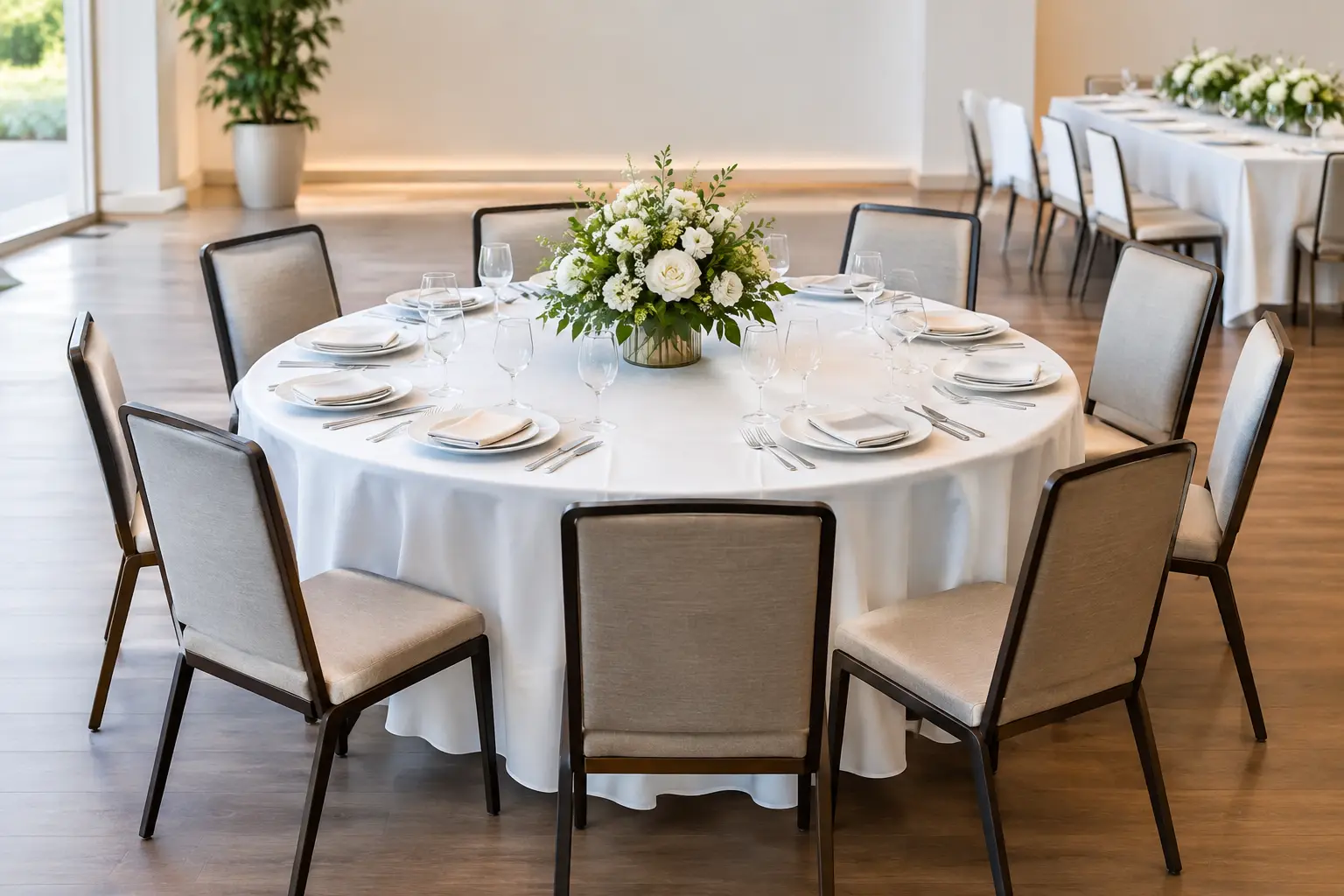
A 60-inch round table is a popular choice for weddings, showers, anniversary parties, and formal dinners. It seats eight guests comfortably, giving everyone enough elbow room for place settings, glassware, centerpieces, and conversation. For 80 guests, plan on 10 tables.
A 72-inch round table typically seats 10 guests comfortably. Eight of these tables will accommodate 80 guests and can make a larger ballroom or backyard tent feel more connected. Because they have a wider footprint, they are best when the venue has generous open space and you do not need an oversized dance floor or buffet area.
An 8-foot rectangular banquet table generally seats eight guests comfortably when chairs are placed along both long sides. You may seat up to 10 by adding guests at each end, but this can feel crowded during a plated meal. For a comfortable 80-person dinner, 10 eight-foot tables is a reliable starting point.
Round Tables: A Classic Choice for Conversation
Round tables work especially well when the goal is a welcoming, social dining experience. Everyone at the table can see one another, and the layout naturally creates distinct groups without making the room feel rigid. They also pair beautifully with floor-length linens, floral centerpieces, and formal place settings.
For 80 guests, the standard round-table options are straightforward:
- 10 60-inch round tables with eight guests at each table
- Eight 72-inch round tables with 10 guests at each table
- Nine or 10 round tables if you want a few open seats, a children’s table, or flexibility for late RSVP changes
The trade-off is floor space. Round tables require circulation room around their full perimeter, so they can consume more usable square footage than a tidy banquet-table layout. A 60-inch round table with chairs needs roughly 10 feet of diameter to function comfortably. Once you add walkways, service paths, and space between tables, a room that looks large on paper can fill quickly.
If you are planning a wedding reception in Chandler, Mesa, Gilbert, or elsewhere in the Phoenix area, also consider the venue environment. A spacious indoor hall may handle 10 round tables easily, while a tented backyard event may benefit from rectangular tables that use every foot more efficiently.
When to Choose 60-Inch Rounds
Choose 60-inch rounds when you want eight guests per table, prefer an intimate feel, and have enough room for a dance floor or buffet. They are often the easiest choice for hosts because the math is clean and the guest experience is consistently comfortable.
When to Choose 72-Inch Rounds
Choose 72-inch rounds when you want fewer tables and are comfortable seating 10 guests together. They can reduce the number of centerpieces, linens, and table numbers you need. However, very tall or wide centerpieces can make conversation harder at a 10-person table, so keep the tabletop design proportional.
Rectangular Tables: Efficient and Flexible
Rectangular banquet tables are an excellent fit for family-style meals, casual celebrations, corporate luncheons, and long communal wedding tables. They create clean rows, make efficient use of narrow rooms, and can be arranged in several ways: separate tables, long king’s-table runs, U-shapes, or perimeter seating.
For an 80-guest event, 8-foot tables are typically the most practical size. Seating four guests along each side gives every person comfortable dining space. If your event includes chargers, multiple glasses, large centerpieces, or formal plated service, avoid counting on end seats unless the table is specifically designed for them.
Six-foot banquet tables can also work. They normally seat six comfortably, with three guests on each long side. You would need about 14 six-foot tables for 80 guests, plus a plan for the remaining guests. That can be useful for smaller groupings, but it adds more table legs, more linen pieces, and more gaps to manage in the room.
Long rectangular table runs can look striking, particularly for rehearsal dinners and outdoor celebrations. The practical consideration is access. Guests seated in the middle of a long run need a clear route to their chairs, and staff need room to serve or clear plates. Leave intentional breaks between table runs rather than creating one continuous line that blocks the space.
Leave Room for More Than Seating
A table count alone does not create a functional event. Before reserving tables, mark the areas that must share the room: a buffet or catering line, beverage station, cake table, gift table, DJ or band space, dance floor, photo area, and entry path. If the event is outdoors, account for shade, cooling, and a weather-conscious layout as well.
Aim for about 4 to 5 feet between occupied tables where possible. This gives guests enough room to pull out chairs and allows servers, family members, and guests with mobility needs to move through the event without squeezing past one another. Main paths should be wider, especially between the dining area and buffet, restrooms, or exits.
A room that technically holds 80 chairs may not comfortably host 80 diners once you add event essentials. This is why an on-site consultation or a measured floor plan can prevent last-minute changes. A smaller number of tables with tighter seating is not always the better value if it leaves guests uncomfortable or blocks service.
Build the Layout Around Your Event Style
The best table arrangement depends on what guests will be doing during the event. A plated wedding dinner needs more space between tables than a casual open-house birthday party. A corporate training session may call for classroom-style tables facing a speaker rather than dinner seating. A cocktail reception may only need a portion of the 80 guests seated at once.
For a formal dinner, plan seating for every guest and allow room for meal service. Ten 60-inch rounds are often the dependable choice. For a buffet meal, keep the buffet outside the dining-table grid if possible, or create a wide central aisle so the line does not interfere with seated guests.
For a family-style meal, rectangular tables are especially practical because platters can run down the center. Allow a little more tabletop room per guest, since shared dishes take up space. For a corporate event, separate dining from presentation seating when the schedule allows. Guests will be more attentive when they are not trying to view a speaker around tall centerpieces or across a crowded meal table.
Do Not Forget the Head Table and Specialty Tables
Your guest-table calculation may cover 80 attendees, but it may not include the couple, wedding party, hosts, or vendors. A sweetheart table seats two and usually replaces the couple’s seats at a guest table. A head table may seat four to 12 people, depending on the wedding party. If those people are included in the 80-person guest count, subtract them from guest tables before ordering.
You may also need tables for the cake, gifts, guest book, catered food, drinks, favors, and equipment. These do not need to match the guest tables exactly, but they should complement the overall setup. Linen colors and sizes can help create a coordinated look while keeping functional tables visually polished.
A Reliable Starting Plan for 80 Guests
If you want a low-stress default, choose 10 60-inch round tables with eight chairs each. It is comfortable, balanced, and easy to dress for weddings, milestone parties, and business dinners. If your venue is narrow or you want communal dining, choose 10 8-foot rectangular banquet tables with eight chairs each.
From there, add your specialty tables and measure the full footprint before confirming. Royalty Rentals can help hosts match clean, well-maintained tables, chairs, linens, and setup support to the actual event space, not just a guest-count formula.
A thoughtful layout lets 80 guests feel expected rather than merely accommodated. Give them a comfortable seat, a clear path through the room, and a setting that makes the celebration feel effortless from the first arrival to the final toast.