

Event Tips
Pipe Drape Rentals for Polished Event Spaces
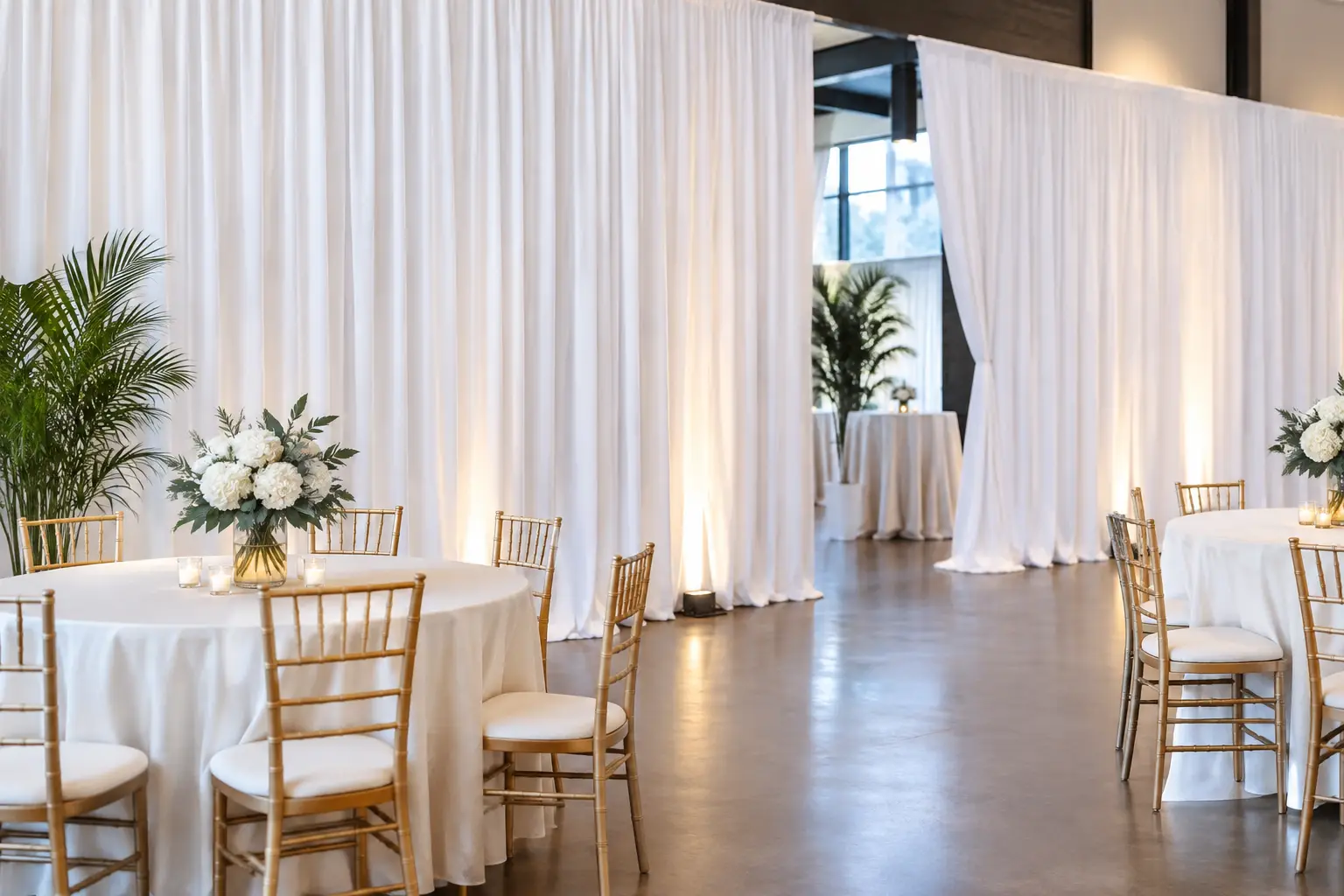
A beautiful venue can still have one awkward wall, a visible service area, or a room that feels far too open once tables are in place. Pipe drape rentals solve those practical problems quickly, turning unfinished areas into intentional backdrops, private zones, and polished event spaces without permanent construction.
For weddings, corporate gatherings, birthdays, and community events, drape is often the detail that makes the room feel complete. The best result is not simply adding fabric to a wall. It is choosing the right layout, height, color, and installation plan for the way guests will move through the event.
What Pipe Drape Rentals Can Change
Pipe and drape systems use adjustable upright poles, crossbars, weighted bases, and fabric panels to create temporary partitions and backdrops. They can stand against a venue wall, define the edge of a dance floor, frame a ceremony, separate vendor areas, or cover storage, doors, and equipment that do not belong in event photos.
That flexibility is especially valuable in multipurpose halls, offices, warehouses, backyards, and larger rooms where the existing architecture does not match the occasion. A black drape treatment can make a presentation stage feel focused and professional. White or ivory fabric can soften a wedding ceremony or reception. A colored backdrop can support a brand palette, school colors, or a themed celebration.
Drape also changes how a room feels. Tall panels can make a large venue feel more intimate, while a well-placed partition can guide guests toward check-in, dining, entertainment, or seating. The goal is to create a clear experience without making the space feel closed off.
Start With the Job the Drape Needs to Do
Before choosing fabric or measuring a wall, decide what the installation must accomplish. A photo backdrop has different requirements than a room divider. A ceremony backdrop needs to look finished from the guest view, while a catering concealment wall needs enough coverage to keep preparation activity out of sight.
For a wedding, pipe and drape may be used behind the sweetheart table, ceremony altar, cake display, or DJ setup. For a corporate event, it can create a stage background, cover an unbranded wall, separate a registration area, or form a controlled entrance. At private parties, it is often an easy way to add visual impact around a dessert table, photo moment, or dance area.
Ask where guests will stand, what they will see when they enter, and whether both sides of the drape will be visible. These answers affect the layout and the amount of fabric needed. A one-sided backdrop can be simple. A partition in the center of a room may need a finished appearance from every angle.
Use drape to define, not just hide
Covering an unsightly area is a common reason to rent drape, but the strongest designs give it a second purpose. A divider can also establish a lounge, create a private family area, or build anticipation before guests enter the main celebration. When drape supports the event flow, it becomes more than a decorative fix.
Be realistic about what fabric can conceal. If guests will walk close to the installation, gaps at the sides, exposed bases, and uneven panels become more noticeable. A professional layout considers those sightlines from the beginning.
Choosing the Right Height, Width, and Fabric
Height is one of the biggest decisions. Lower drape can define a space while keeping the room open. Taller drape delivers more drama and better coverage, particularly when hiding walls, equipment, or venue features. However, taller is not automatically better. In a room with low ceilings, drape that is too high can feel crowded. In a large ballroom, short panels may disappear visually.
Measure the area you want to cover and account for fullness. Fabric panels look better when they have gentle gathers rather than being pulled completely flat. The exact amount depends on the material and desired look, but a rental professional can help determine a layout that appears full without using more inventory than the event requires.
Color matters just as much as height. White, ivory, champagne, gray, and black are versatile choices because they work with many linen colors and lighting plans. Dark drape is excellent for hiding visual clutter and creating contrast behind a stage. Light drape can brighten a room, but it may show wrinkles, marks, or shadows more readily under certain lighting.
If lighting is part of the design, discuss it early. Uplights, pin spots, and colored lighting can transform neutral fabric, but they can also reveal every fold or create harsh shadows. Consider how the drape will look in daylight, during dinner, and once evening lighting is turned on.
Planning Pipe Drape Rentals With Your Venue
The venue should be part of the conversation before the rental order is finalized. Ask whether it has rules for freestanding structures, access times, fire-rated materials, sprinkler clearance, exits, or attachment to walls and ceilings. Many venues do not allow anything to be taped, pinned, or tied to their finishes. A freestanding pipe and drape system can be a practical answer, but it still needs to be installed in an approved location.
Never place drape where it blocks emergency exits, exit signage, fire equipment, or required walkways. Keep service corridors and guest traffic paths clear, especially around bars, buffet tables, stages, and restrooms. If the event includes children, active entertainment, or a busy dance floor, bases and poles should be positioned where guests are less likely to bump into them.
For outdoor events in Chandler, Mesa, Gilbert, Scottsdale, or other Phoenix-area locations, wind and ground conditions deserve special attention. Pipe and drape is generally best for protected outdoor spaces or indoor use. Open, windy areas may require a different design approach, extra stabilization, or a more suitable structure. It depends on the weather forecast, surface, drape height, and exposure of the location.
Coordinate access and installation timing
A polished setup requires time. Confirm when the rental team can enter the venue, whether elevators or loading docks are involved, and when other vendors will arrive. Installing drape after tables, catering equipment, floral, and audiovisual gear are already packed into the room can limit access and make setup more difficult.
For a smoother event day, provide a floor plan or clear instructions that identify walls, doors, staging, tables, and the desired drape locations. Even a simple sketch helps prevent last-minute changes. If the layout is complex or the space has unusual dimensions, an on-site consultation can save time and help avoid ordering too little or too much.
Delivery and Setup Are Part of the Finish
Drape can look simple once it is standing, but the final appearance comes down to details: level crossbars, evenly spaced uprights, clean panels, balanced fullness, and secure bases. Equipment should arrive clean and in good condition, especially when it will appear in ceremony photos or directly behind a head table.
With Royalty Rentals, customers can arrange delivery before the event date and choose setup support based on their needs. That is especially helpful when drape must coordinate with tables, chairs, linens, catering equipment, or event HVAC. Working with one local rental partner can reduce the number of delivery windows and help the room come together in the right order.
Setup service is also worth considering when the event schedule is tight, the installation is tall, or the venue requires professional handling. A self-directed host may be comfortable with a simple backdrop, while a wedding planner or office manager may prefer to hand off the installation and focus on vendors, guests, and timing.
Build a Complete Look Around the Drape
Pipe and drape works best when it connects to the rest of the room. Pair a ceremony backdrop with coordinated aisle seating and linens. Use a stage backdrop behind a podium with clean table coverings and intentional lighting. For a party photo area, leave enough open space for groups to gather without creating a traffic jam near the entrance.
Avoid treating drape as an afterthought. If it is central to the photos, ceremony, presentation, or guest arrival, reserve it early and design the surrounding furniture layout around it. This gives the installation room to make an impression rather than forcing it into a leftover corner.
A well-planned drape installation can turn a blank room into a setting guests remember. Start with the experience you want people to have when they walk in, then let the layout, fabric, and professional setup support that moment.