
Event Tips
Outdoor Party Climate Control Guide for Phoenix
A beautiful backyard, patio, or open-air venue can still fall flat if guests are squinting into the sun, searching for shade, or leaving early because the evening turned cold. This outdoor party climate control guide helps Phoenix-area hosts plan for comfort with the same care they give food, seating, and decor.
Climate planning is not about making an outdoor event feel indoors. It is about giving guests relief where and when they need it, while preserving the open-air atmosphere that made the venue appealing in the first place. The right approach depends on your guest count, event hours, layout, season, and access to reliable power.
Start With the Guest Experience, Not the Equipment
Before choosing fans, heaters, misters, or tents, consider what your guests will actually experience from arrival through departure. A noon graduation party and a sunset wedding reception may use the same yard, but they have very different comfort challenges.
Walk the space at the same time of day as your event. Notice where the sun lands, which areas hold heat from concrete or pavers, where breezes move through, and whether the venue cools quickly after dark. In the Phoenix metro area, a patio that feels pleasant at 9 a.m. can become difficult by early afternoon, while desert evenings from late fall through early spring may call for warmth once the sun is down.
Also think about where people will linger. Guests tend to gather around the bar, buffet, dessert table, dance floor, ceremony seating, and conversation areas. Cooling or heating only the perimeter may leave the busiest parts of the event uncomfortable. Climate-control equipment works best when it supports the layout rather than being added after tables and service stations are already in place.
Shade Is Your First Line of Outdoor Climate Control
For daytime events, shade does more than improve photos and protect guests from direct sunlight. It lowers the temperature people feel, protects food and beverages, and gives cooling equipment a better chance to work effectively.
A tent, canopy, covered patio, or properly positioned umbrellas can create distinct comfort zones for dining and socializing. The trade-off is airflow. A fully enclosed structure can trap warm air, particularly when it sits over heat-retaining surfaces. Open sides and intentional fan placement often make a shaded area feel noticeably more comfortable than a closed, stagnant one.
Plan shade based on use, not just square footage. Prioritize seating for older guests, children, and anyone who may be less comfortable in the heat. Cover the buffet and beverage station when possible, since sunlight can quickly affect chilled drinks, ice, frosting, and catered food presentation. If a ceremony is scheduled during bright daylight, consider the direction guests will face. Even a shaded ceremony area can be unpleasant if attendees are looking directly into the sun.
Choose Cooling That Fits the Conditions
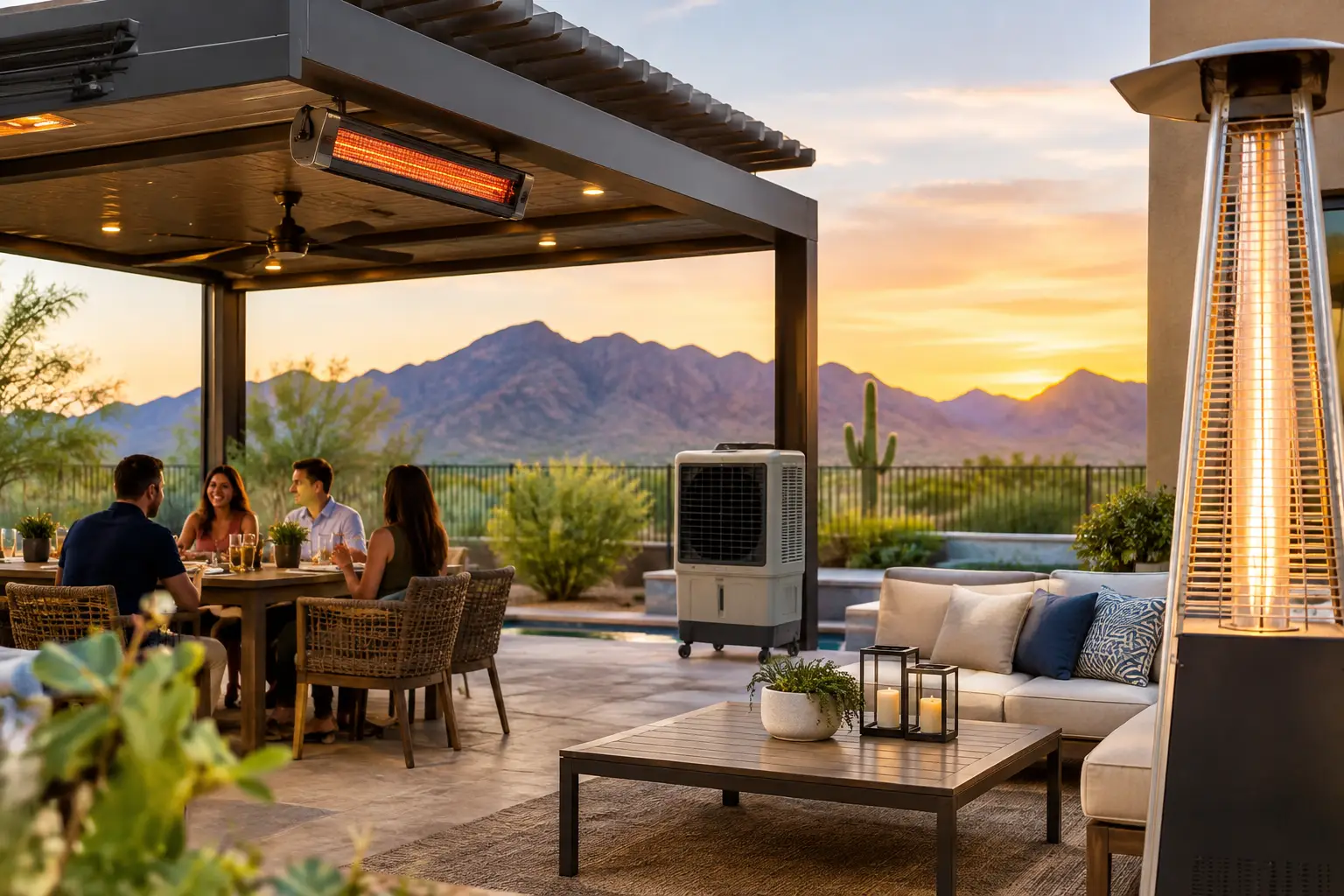
Fans are often the most practical starting point for warm-weather gatherings. They improve air movement, help guests feel cooler, and work well beneath tents, covered patios, and open-sided gathering areas. They are particularly useful when the event space has shade but little natural breeze.
Misting can offer stronger relief during dry, hot weather, but it needs thoughtful placement. Fine mist is best used in open areas with good air circulation. Position it too close to dining tables, dance floors, electronics, or decorative linens, and moisture can become a nuisance instead of a benefit. It may also be less desirable for formal events where guests are dressed for a wedding or corporate function.
Portable air conditioning can be effective in enclosed or partially enclosed spaces, but it is not a universal answer for an open backyard. Cooling a tent requires the correct size equipment, adequate power, and a structure that can retain conditioned air. If the sides remain fully open on a very hot afternoon, cooled air escapes quickly. In those situations, shade and high-volume airflow may be a more sensible investment.
Avoid the common mistake of setting one fan at the edge of a large event and expecting it to cool everyone. Equipment should be distributed around occupied zones, with cords safely managed and airflow directed across people rather than straight at food displays or lightweight paper goods.
Do Not Forget Power Planning
Climate-control equipment is only as dependable as the power supporting it. Before reserving fans, heaters, or air conditioning, confirm the number and location of outlets, available circuits, and whether the venue can handle the electrical load alongside catering equipment, lighting, music, and bar service.
A dedicated power plan helps prevent tripped breakers during the event. Extension cords should be rated for the intended use, protected from foot traffic, and kept away from wet areas. If the event is at a park, ranch property, or open venue with limited electricity, discuss generator needs early. It is much easier to build power into the plan than to solve it after tables, linens, and guests have arrived.
Plan for Cool Evenings Without Overheating the Space
Phoenix weather is famous for heat, yet cool evenings are a real consideration for fall, winter, and early spring celebrations. Outdoor heaters can make a patio, tented dining area, or cocktail space far more inviting after sunset. The goal is targeted warmth, not turning every corner of the venue into a hot zone.
Place heaters near seating and standing areas where guests will spend time, while maintaining safe clearances from tent fabric, drapery, trees, decor, and walkways. A heater beside the dance floor may be unnecessary once guests are moving, while a quiet lounge area or outdoor dinner table may benefit from it greatly.
It also helps to anticipate a temperature change in the event timeline. Guests may be comfortable during a late-afternoon ceremony, then need warmth after dinner. Staging heaters so they can be started as the temperature falls is often more comfortable than running them at full strength all evening.
Build a Layout That Lets Air Move
A polished event layout can unintentionally block airflow. Tall backdrops, solid tent walls, tightly packed lounge furniture, and buffet lines placed across narrow patios can all create warm, crowded pockets.
Leave circulation paths around tables and avoid placing every large item directly beneath the central covered area. If you are using a tent, consider which sides should remain open for the breeze and which side needs protection from sun, wind, or an evening chill. The answer can change by venue and season, which is why an on-site walkthrough is valuable for larger celebrations.
For a corporate event, create more than one gathering point so attendees are not all packed into a single warm area near check-in or the bar. For weddings and family parties, keep a comfortable seated zone available for guests who want to step away from the dance floor or activity area. Comfort is also about giving people choices.
Match Your Plan to the Season
Summer events call for an earlier start time whenever possible. A morning brunch, poolside gathering, or post-sunset reception can reduce exposure to the most intense heat. If an afternoon event cannot be moved, make shade, hydration, and air movement central to the plan rather than optional extras.
During monsoon season, prepare for fast changes. Wind can affect umbrellas, tent sides, signage, lightweight decor, and even the direction of misting. Secure equipment properly, keep electrical connections protected, and have a quick plan for moving food, gifts, or guests under cover if conditions change.
Fall, winter, and spring are ideal seasons for outdoor entertaining, but temperatures can vary widely from afternoon to night. A combination of daytime shade and evening heaters is often more useful than choosing only one. Check the forecast close to the event date, but do not build your entire plan around a perfect prediction. Flexible rental periods and equipment that can be staged in advance provide useful peace of mind.
Reserve Early and Confirm the Details
Climate-control rentals are most helpful when they are planned alongside tables, chairs, linens, and catering equipment. Waiting until the forecast looks uncomfortable can limit availability and force a rushed layout change.
When requesting a quote, provide the event date, guest count, venue address, setup area, event hours, and any available information about power. Photos and a simple site sketch can also help identify practical placement for equipment. Royalty Rentals can support hosts with delivery before the event date and optional on-site setup according to their instructions, helping reduce one more layer of event-day logistics.
The best outdoor parties do not depend on perfect weather. They give guests a shaded seat, a comfortable breeze, a warm place to gather after sunset, and the feeling that every detail was considered before they arrived.