
Event Tips
How to Cool an Outdoor Reception in Arizona
A beautiful outdoor reception can lose momentum quickly when guests are searching for shade, makeup is melting, and the dance floor sits empty until sunset. Knowing how to cool outdoor reception spaces in Arizona starts with treating comfort as part of the event design, not a last-minute add-on.
Phoenix-area heat is not one-size-fits-all. A late-afternoon wedding in Chandler, a corporate dinner in Scottsdale, and a backyard celebration in Queen Creek each have different sun exposure, guest counts, power access, and venue limitations. The right cooling plan combines shade, airflow, layout, timing, and the equipment that fits your setting.
Start With Shade Before Adding Cooling Equipment
Shade is the foundation of every successful outdoor reception. Fans can move air, but they cannot protect guests from direct sunlight. A shaded dining area feels noticeably more comfortable, keeps tables from becoming too hot to touch, and gives guests a place to settle in during the warmest part of the day.
A tent, canopy, or covered patio can work well, but placement matters as much as the structure itself. Consider where the sun will be during guest arrival, cocktail hour, dinner, and dancing. A space that looks shaded during a morning venue visit may be fully exposed by 5 p.m.
For receptions under tents, choose a size that allows breathing room between tables rather than filling every available square foot. Overcrowding traps body heat and makes it harder for air to circulate. High peaks and open sides can help hot air rise and move out, while sidewalls may be useful later in the evening for privacy or wind control.
Understand the tent cooling trade-off
An open-sided tent is easier to ventilate with fans, but it will not hold cooled air from an air conditioner. If the reception requires portable air conditioning, the tent needs enough enclosure to contain the cooled air, usually through properly fitted sidewalls. That creates a more controlled environment, though it also requires thoughtful entry points, adequate power, and professional equipment placement.
The best option depends on the season and event schedule. For a spring evening reception, shade and high-volume fans may be enough. For a summer event that begins before sunset, enclosed cooling may be worth the investment for guest comfort.
Create Airflow Where Guests Actually Gather
When planning how to cool an outdoor reception, focus first on the places where people will remain seated or standing for more than a few minutes. The dining area, bar, buffet line, ceremony seating, lounge space, and dance floor should each have a comfort plan.
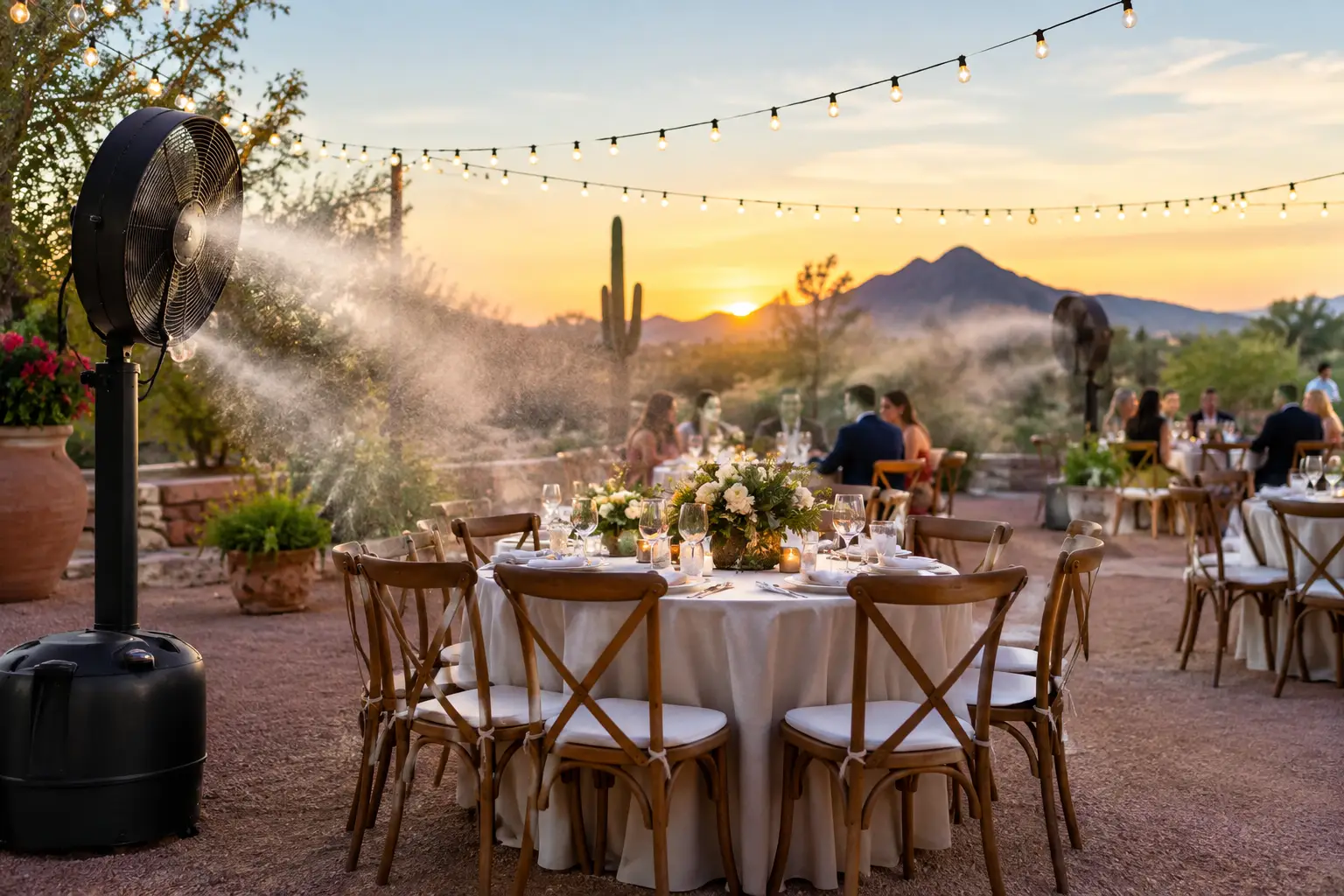
High-volume fans are especially effective in open tents, covered patios, garages converted for entertaining, and breezeways. Their job is not to make the air cold. They create a steady breeze across the skin, helping perspiration evaporate and making the area feel more comfortable.
Position fans to move air across the guest area rather than directly into centerpieces, paper place cards, lightweight linens, or buffet displays. A strong fan aimed at a dessert table may cool the room but create a different problem. Place equipment securely, keep cords out of walkways, and leave clear access for guests, servers, and photographers.
For a larger reception, one fan at the entrance is rarely enough. Distribute airflow through the space, with added attention to places where lines form. The bar and buffet are often the first spots to feel crowded and warm, especially when they are placed against a wall or near a cooking area.
Choose a Layout That Avoids Heat Pockets
Event layouts can either encourage comfort or work against it. Keep dining tables out of direct sun whenever possible and avoid placing the buffet where afternoon sunlight will hit food, serving equipment, and waiting guests. If the venue has a naturally shaded wall, mature trees, or a covered area, use those features strategically.
Give the bar a shaded location with airflow. Guests will visit it throughout the reception, and it can become an easy place to provide cold water, iced tea, and other refreshing drinks. A clearly visible hydration station also helps guests stay comfortable without needing to ask.
Create a separate cool-down area for guests who need a break from the activity. This can be a shaded lounge with comfortable seating and fans, an indoor room at the venue, or a more enclosed tent section with portable cooling. Older relatives, young children, and guests in formal attire will appreciate having a place to reset.
Keep the dance floor away from heat-producing equipment whenever possible. Catering stations, grills, generators, and lighting equipment can all raise the temperature in nearby areas. A dance floor needs open circulation around it, especially once the reception becomes more active.
Let Your Timeline Do Some of the Cooling
In Arizona, timing can be one of the most valuable tools you have. If possible, schedule the ceremony and formal photos around the strongest afternoon sun, then move dinner and dancing later as temperatures begin to drop.
For weddings, a later ceremony can reduce the time guests spend seated in direct heat. Cocktail hour can take place in a shaded or cooled area while the sun lowers, followed by dinner after sunset. For corporate events and private celebrations, consider an evening start time or a breakfast gathering during warmer months.
Do not assume sunset means instant comfort. Pavement, concrete, and artificial turf can hold heat well into the evening. If your reception is on a hard surface, use shade during the day and maintain airflow after dark. The surrounding surface temperature can affect guest comfort as much as the air temperature.
Plan Power Before You Reserve Fans or AC
Cooling equipment only works when the power plan is realistic. Before reserving portable air conditioners, evaporative coolers, misting equipment, or large fans, confirm the available electrical service with the venue or property owner.
A residential outlet may not safely support multiple high-powered units, catering equipment, lighting, DJ gear, and a photo booth at the same time. Overloaded circuits can interrupt the reception and create avoidable safety concerns. A larger event may require dedicated circuits or a generator planned by a qualified provider.
Also account for the path from power source to equipment. Extension cords should be rated for the load, protected from foot traffic, and routed so they do not cross entrances or aisles. Professional setup support is particularly useful when a reception includes several pieces of climate-control equipment alongside tables, chairs, linens, and catering stations.
Use Misters and Evaporative Cooling Carefully
Misting systems and evaporative coolers can be effective in dry conditions, but they are not right for every reception setup. Fine mist can feel refreshing in an open lounge or cocktail area, yet it should be kept away from food, electronics, paper signage, delicate décor, and guests who prefer not to get damp.
Evaporative cooling performs best with low humidity and an open, well-ventilated area. It is not a substitute for air conditioning in an enclosed tent. If monsoon humidity arrives or rain is possible, the comfort benefit may be less predictable.
Use these options as targeted relief rather than the only cooling strategy. A shaded, airy reception with cold drinks and a calm place to sit will still serve guests well if weather conditions change.
Protect Food, Drinks, and Guest Comfort Together
A cool reception is about more than temperature. Chilled beverages should be easy to reach, ice should be replenished often, and water should be available in more than one location for larger events. Serve heat-sensitive foods quickly, keep cold dishes properly chilled, and ask your caterer how they plan to manage outdoor service safely.
Choose linens and seating with the weather in mind. Light-colored table linens can reflect more sunlight than dark fabrics, while sturdy table coverings and secure centerpieces hold up better around fans. Comfortable chairs, enough table space, and uncluttered walkways also help guests relax rather than feeling crowded.
If your reception needs tenting, fans, portable cooling, tables, chairs, linens, or setup support, Royalty Rentals can help coordinate the essentials so your space is ready before guests arrive. Clean, well-maintained equipment and a clear layout plan make it easier to focus on the celebration instead of the logistics.
The goal is not to eliminate Arizona weather from an outdoor reception. It is to give every guest enough shade, airflow, hydration, and room to enjoy the reason they came together in the first place.