
Event Tips
How to Choose Banquet Tables for Any Event
A banquet table can look like a simple rental decision until guests are squeezed into their seats, servers cannot clear plates, or the room feels crowded before the first guest arrives. The right table plan supports the entire event – from conversation and dining comfort to traffic flow, décor, and service. Knowing how to choose banquet tables starts with more than counting chairs. It means matching the table shape and size to the way your guests will gather.
Whether you are planning a wedding reception in Chandler, a corporate luncheon in Scottsdale, or a family celebration at home, a thoughtful table selection creates a polished atmosphere while making the event easier to manage.
How to Choose Banquet Tables Based on Your Event
Start with the purpose of the gathering. A seated dinner needs more personal space, tableware room, and service access than a casual open house. A training session may call for long rectangular tables where attendees can write and use laptops. A wedding reception may benefit from a mix of rounds for guests, rectangular tables for the head table and gifts, and specialty tables for desserts or catering.
Guest count comes next, but do not treat maximum table capacity as the ideal capacity. A table that technically seats ten may feel more comfortable with eight once you add chargers, glassware, centerpieces, and place settings. For a plated meal, comfort usually matters more than fitting every possible chair around a table.
Also consider the event’s pace. Guests at a quick business breakfast can sit closer together than guests enjoying a multi-course wedding meal. If people will be standing, mingling, and returning to tables throughout the evening, leave enough open space that chairs and bags do not become obstacles.
Choose the Right Table Shape
The most practical table shape depends on your room, guest experience, and floor plan. There is no single best option for every event.
Round tables encourage conversation
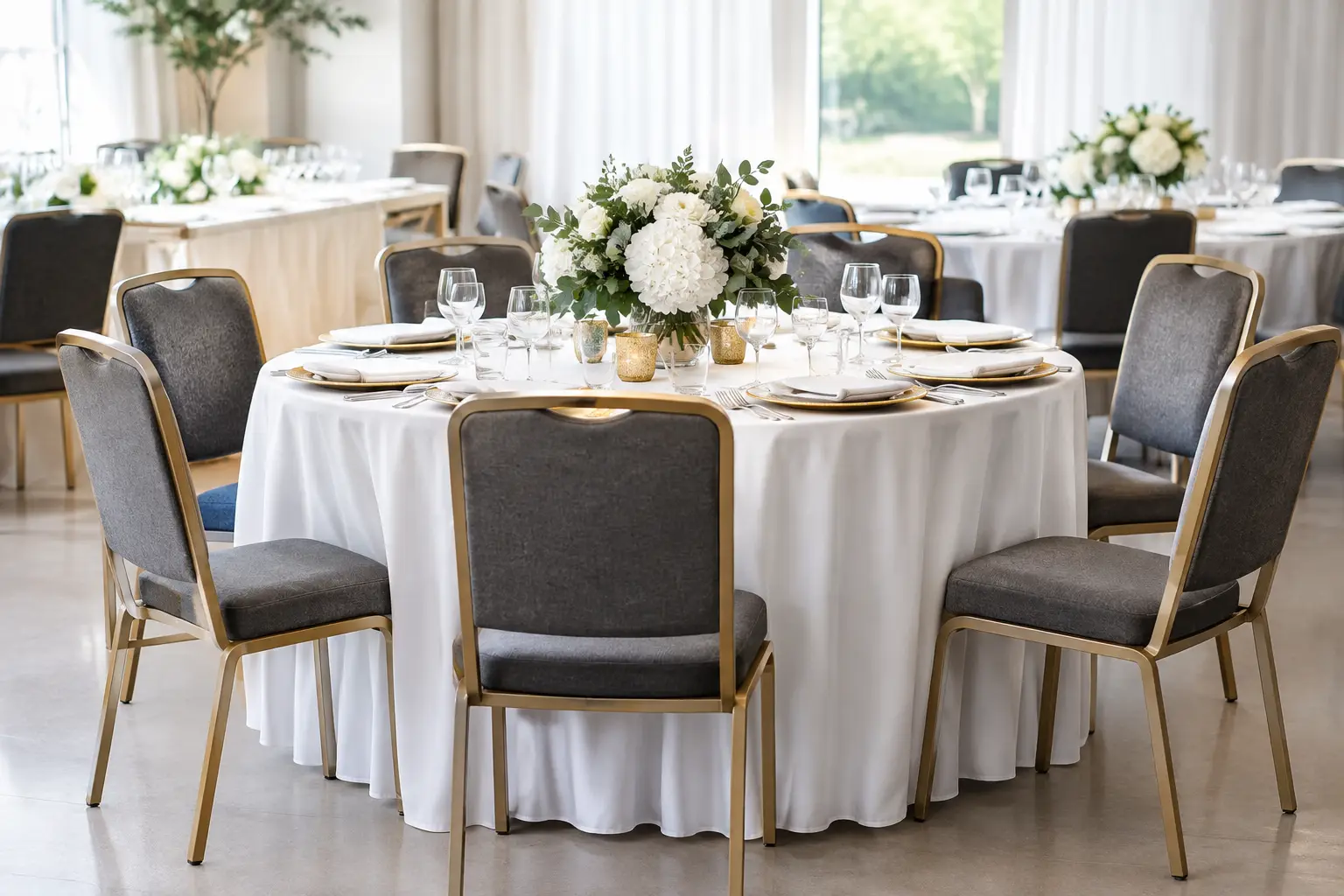
Round banquet tables are a familiar choice for weddings, anniversaries, and formal dinners because every guest can see and talk with others at the table. They soften a room filled with straight walls and create an elegant, balanced look under linens.
A 48-inch round typically seats six guests comfortably. A 60-inch round is commonly used for eight guests and can seat up to ten when space and place settings allow. For a fuller dining setup with chargers, multiple glasses, or large centerpieces, plan on the lower end of the seating range.
Rounds do require more floor area than many hosts expect. They also create curved gaps between tables, which can make a tight room less efficient. If the venue has a limited footprint, rectangular tables may allow you to seat the same number of people with clearer aisles.
Rectangular tables maximize usable space
Rectangular banquet tables are flexible, efficient, and easy to arrange in rows, long family-style runs, U-shapes, or classroom layouts. They work especially well for corporate meetings, community events, buffet seating, backyard celebrations, and long head tables.
An 8-foot rectangular table generally seats eight guests comfortably – three on each long side and one at each end. A 6-foot table generally seats six. End seating can be removed when table legs, décor, or service access make it impractical.
These tables are also a smart option when your guest list is still changing. You can add or remove a table from a row more easily than redesigning an entire room of rounds. When dressed with floor-length linens, rectangular tables can look just as refined as rounds while giving you a more efficient layout.
Specialty shapes solve specific layout needs
Square tables can create a modern, intimate feel for smaller dinner parties or lounge-style events. Serpentine and specialty tables can be useful for dramatic buffet lines, displays, or curved seating plans. They are not necessary for every occasion, but they can add visual interest when the room is large enough to support them.
For most events, a combination works best. Use guest tables that support conversation, then add rectangular tables where function matters most: registration, gifts, desserts, bars, catering stations, and AV equipment.
Measure the Venue Before You Reserve
A guest count tells you how many seats you need. Venue measurements tell you whether those seats will actually work.
Ask for the usable dimensions of the room, not just the total square footage. Built-in bars, stages, fireplaces, pillars, dance floors, catering doors, restrooms, and emergency exits all reduce the area available for tables. If you are hosting at home, include patios, gates, landscaping, pools, and the route rental equipment must travel from the delivery vehicle to the setup area.
As a practical starting point, allow about 60 inches from one table edge to the next when guests will be seated and servers need to move between tables. Tighter spacing may work for an informal gathering, but it can feel cramped once chairs are occupied. Main walkways, buffet approaches, and paths to restrooms should be wider.
Do not forget chair clearance. A chair pushed out from the table needs room behind it. A layout may look comfortable on paper until every guest is seated at once. If your venue is compact, reduce the number of guests per table rather than eliminating essential aisles.
Plan Around Food, Service, and Tabletop Space
The meal style has a direct effect on table selection. For a plated dinner, guests need room for full place settings, beverages, bread plates, and shared décor. For family-style service, long rectangular tables can be ideal, but add even more tabletop space for serving platters.
A buffet lets you use guest tables more efficiently, but the buffet itself needs careful planning. Place it away from entrances and major traffic lanes, and leave room for a line to form without blocking seated guests. Catering tables should be long enough for chafing dishes, serving utensils, plates, and replenishment space. A cramped buffet can slow service and make a well-planned event feel disorganized.
Cocktail-style events have different needs. A few high-top tables give guests a convenient place to set drinks and small plates without committing too much floor space to seating. If older guests, families, or guests eating a full meal will attend, pair high-tops with enough standard-height tables and chairs for comfort.
Select Linens With the Table in Mind
Linens are more than a color choice. The correct size creates a finished look, hides table legs and storage underneath, and prevents fabric from falling awkwardly short.
For a casual event, a linen that drops partway down the table can be perfectly appropriate. For weddings, galas, and business dinners, floor-length linens usually create the cleanest presentation. The linen size depends on the table’s length, width, and height, so confirm the exact table dimensions before choosing linens.
Think about what will sit on top of the linen as well. Large floral arrangements, runners, chargers, signage, and candles can make a table feel crowded quickly. If the centerpieces are substantial, select a table size that gives guests enough room for place settings and conversation.
Avoid Common Banquet Table Planning Mistakes
The most frequent mistake is ordering tables only by the maximum number of seats. A room may hold the chairs, yet still feel uncomfortable because there is no space for service or movement. Another common issue is forgetting support tables for the details that keep an event running: check-in, gifts, cake, coffee, DJ equipment, catering, and cleanup.
Hosts also sometimes focus on guest seating before deciding where the dance floor, buffet, and bar will go. These high-traffic areas should be established early. Once they are positioned, the guest-table layout becomes much easier to build around them.
Finally, account for the rental process. Confirm delivery timing, venue access, setup instructions, and whether tables need to be placed in a specific arrangement. Clean, well-maintained equipment and a clear setup plan save valuable time when you are coordinating vendors, décor, and guest arrival.
Get a Layout That Feels Comfortable and Intentional
The right banquet tables should make guests feel welcomed, not managed. Choose shapes that fit the room, seat people comfortably rather than tightly, and protect the pathways that guests and staff need throughout the event. A simple scaled floor plan can reveal problems before delivery day and help you reserve only what the event truly needs.
For Phoenix-area hosts who want support with measurements, inventory, delivery, and setup, Royalty Rentals can help turn those decisions into a practical event layout. A well-planned room gives you more freedom to focus on the people at your event – and lets every guest enjoy the atmosphere you worked hard to create.