
Weddings
How Many Chairs for a Wedding Reception Do You Need?
Your venue may hold 150 people, but that does not automatically mean you should rent 150 chairs. The question of how many chairs wedding reception plans need comes down to your confirmed guest count, your floor plan, the style of meal service, and whether the same chairs will be used for the ceremony. Getting the number right keeps guests comfortable without filling the room with unused inventory.
Start With One Chair Per Expected Guest
For nearly every seated wedding reception, the baseline is simple: plan for one chair per guest. If 120 guests are expected to attend dinner, rent at least 120 dining chairs. This count includes everyone who will be seated for the meal – the couple, wedding party, family members, children, and vendors who have been invited to dine with guests.
Use your expected attendance rather than the number of invitations mailed. A couple might invite 160 people and receive 125 yes responses. Renting for 160 can waste space and budget, while renting for only 115 can leave you scrambling if a few guests bring approved plus-ones or accept late.
A practical approach is to use your final RSVP count, then add a small cushion of 2 to 5 percent. For a 100-person reception, that means ordering 102 to 105 chairs. The extra seating covers last-minute confirmations, a misplaced chair during setup, or a vendor meal that was not included in the initial count.
A Quick Wedding Reception Chair Formula
For a seated reception, use this calculation:
Final guest count + seated vendors + 2 to 5 percent extra chairs = reception chair order
If you have 125 confirmed guests, six vendors receiving meals, and want a 3 percent cushion, your order would be about 135 chairs. Round up rather than down. A few extra chairs are far easier to manage than asking guests to stand during dinner.
Count Ceremony and Reception Chairs Separately
Many weddings have two seating needs: ceremony chairs and reception chairs. Whether you need to rent both quantities depends on timing, labor, venue access, and the type of chair you choose.
If your ceremony ends at 5:00 p.m. and cocktail hour begins immediately, it may be possible to move ceremony chairs to the reception area. This works best when the ceremony and reception are in the same location, the layout is nearby, and you have a dedicated setup team. It is less practical when guests need to be seated for dinner soon after the ceremony or when chairs must be carried across a large property.
For most weddings, separate ceremony and reception chair counts create a calmer timeline. Guests can enjoy cocktail hour while the reception remains fully arranged, and the setup crew is not racing to reset hundreds of seats. In the Phoenix area, this can be especially helpful for outdoor events where timing, heat, and sunset affect every part of the schedule.
If you do plan to reuse ceremony chairs, confirm the transition plan before reserving. Identify who will move them, where they will go, how long the changeover takes, and whether the venue allows guests to enter the reception space before the reset is complete.
Consider Your Table Layout Before Finalizing the Order
The chair total may begin with your guest count, but your table layout determines whether the room will feel polished and functional. Each table needs enough chairs for its intended capacity, plus sufficient clearance for guests and servers to move around it.
A standard 60-inch round table typically seats eight comfortably and can sometimes seat 10 in a tighter arrangement. For a formal plated dinner, eight chairs usually provides a more comfortable experience, especially when place settings, chargers, centerpieces, and glassware are part of the design. For a casual buffet or backyard-style celebration, seating 10 at a 60-inch round may be appropriate if the table settings are simpler.
Rectangular banquet tables offer more flexibility. An 8-foot table can often seat eight guests comfortably, with four on each side, or 10 when chairs are placed at both ends. Farm-style seating may look relaxed and communal, but be mindful of elbow room. Guests in formalwear will appreciate space to sit, eat, and stand without bumping neighboring chairs.
Do not forget the head table or sweetheart table. A sweetheart table requires two chairs, while a head table needs chairs for the couple and every member of the wedding party who will be seated there. If parents, siblings, or attendants are joining the head table, add them to the total early rather than borrowing chairs from guest tables later.
Account for Cocktail Hour, Lounges, and Special Seating
Dinner chairs are the priority, but not every chair at a wedding reception is assigned to a dining table. Your event may need additional seating for cocktail hour, a lounge area, a photo booth, or a dessert station.
Cocktail tables are commonly designed for standing guests, yet a few chairs nearby make the space more welcoming for older relatives, guests wearing heels, and anyone who needs a break between the ceremony and dinner. A lounge setup can also give your reception a more relaxed feel, but it should supplement dining seating, not replace it unless you are intentionally hosting a cocktail-style event.
Reserve special seating when it serves a real guest need. Consider a chair for the guest book attendant, the DJ or musician if requested, or an elderly family member who needs an accessible spot during the ceremony. High chairs may be needed for young children, while a wheelchair-accessible table requires clear space rather than a standard chair count.
When You Can Rent Fewer Chairs
A full chair for every invited person is not always necessary. A cocktail reception, open-house celebration, or late-night dessert party may be designed around mingling rather than a seated meal. In those cases, planning chairs for 50 to 70 percent of expected guests can work well, provided there are cocktail tables and varied seating options.
This approach has trade-offs. It creates a lively, social atmosphere and can lower rental costs, but it is not ideal for a long reception, a formal dinner, or a guest list with many older adults and families. If guests will be eating a full meal, listening to toasts, or staying for several hours, one chair per guest remains the dependable choice.
Choose Chairs That Match the Event and the Setting
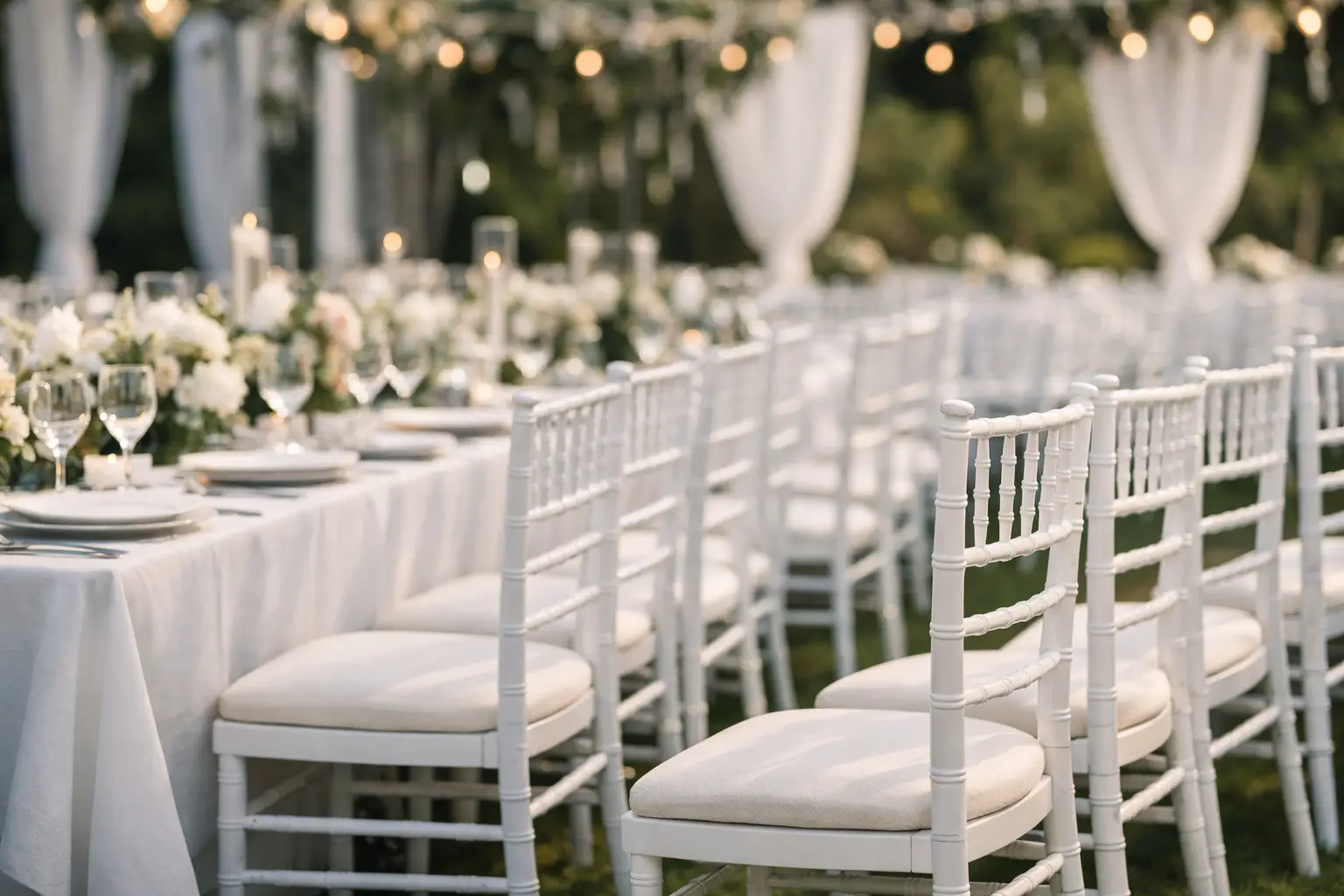
The right quantity matters, but chair style also shapes the experience. Folding chairs are practical for ceremonies and casual receptions. Padded chairs add comfort for longer dinners. Chiavari-style chairs, cross-back chairs, and other elevated options can complement a more formal wedding design.
For outdoor receptions, ask how chairs will perform on the surface. Grass, gravel, pavers, and uneven backyard terrain can affect stability. A chair that looks beautiful in a showroom may not be the best choice for a lawn ceremony after irrigation. Your rental partner can help match the chair style to the site, table selection, linen colors, and event schedule.
Royalty Rentals helps couples across the greater Phoenix area plan these details with clean, sanitized inventory, delivery before the event date, and optional setup based on your instructions. A consultation is particularly useful when your venue has an unusual layout or when you are combining ceremony, cocktail hour, and dinner in one space.
Confirm the Final Number Before Delivery
Once your guest list is nearly final, review the chair count alongside your tables, floor plan, and meal count. These numbers should tell the same story. If you have 14 tables set for eight guests, two sweetheart chairs, and six vendor meals, you need 120 dining chairs before adding extras.
Ask your venue or planner whether chairs are included in the site rental. Some venues provide ceremony seating but not reception seating, while others include a limited number of basic chairs that may not match your wedding design. Clarifying this early prevents duplicate orders and avoids discovering a shortage during setup.
A well-planned chair order is not just a rental detail. It gives every guest a place to settle in, share a meal, hear the toasts, and stay present for the moments you worked so hard to create. When you are ready to reserve, build from your final headcount and leave room for the small surprises that make a wedding day feel human.