
Event Tips
Farm Tables vs Roundtables: Which Fits Your Event?
A table choice changes more than the look of a room. It affects how many guests you can seat, how easily they move through the space, where food service fits, and whether the event feels intimate or expansive. When comparing farm tables vs roundtables, the best choice comes down to your guest count, venue layout, event style, and the experience you want people to have once they sit down.
A farmhouse table can make a wedding reception feel warm and intentional. Roundtables can make a large dinner feel welcoming, balanced, and easy to navigate. Neither is automatically better. The right layout is the one that supports your plan without making the room feel crowded or leaving guests disconnected from the celebration.
Farm Tables vs Roundtables at a Glance
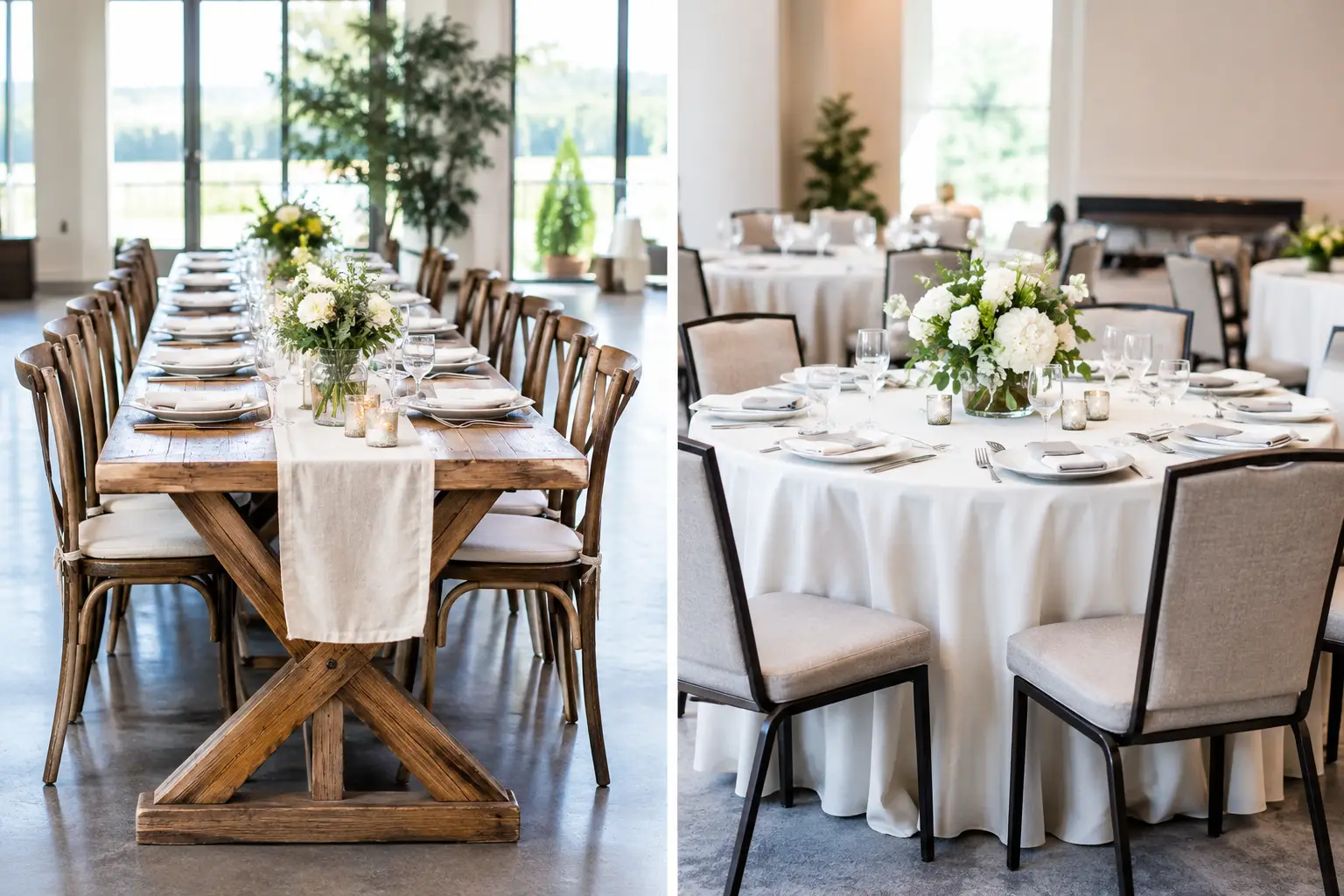
Farm tables are long, rectangular tables, often with a wood finish or a rustic-inspired look. They create clean lines in a room and are commonly used for head tables, family-style meals, vineyard-inspired weddings, backyard celebrations, and events with a modern organic design. They are also a strong option when you want to make the tables themselves part of the decor.
Roundtables are designed for small groups to face one another. They are a classic choice for wedding receptions, banquets, fundraisers, holiday parties, and corporate dinners because they support conversation and use a room efficiently. A round layout also gives planners flexibility to mix table sizes based on the guest list and available floor space.
The decision is rarely only about rustic versus formal. Think about your event from the guest’s point of view: Can they find their seats easily? Is there enough elbow room? Can servers, photographers, and guests move through the room comfortably? Those practical details are what make a polished event feel effortless.
When Farm Tables Are the Right Choice
Farm tables work best when the atmosphere is personal, design-forward, and centered on shared dining. Long rows naturally create a communal feeling, especially when guests are seated family-style or when a wedding party and close family members are meant to sit together.
They are especially effective for smaller to medium-sized guest counts, where the room can support long table runs without creating narrow aisles. A rectangular layout can also be helpful in long, narrow venues, patios, or backyards where roundtables would leave unused space along the walls.
The visual impact is a major reason hosts choose farm tables. A bare wood surface can look beautiful with greenery, candles, bud vases, or simple place settings. If you prefer linens, runners can add color while allowing the table’s character to remain visible. This gives couples and hosts an elevated look without needing oversized centerpieces at every seat.
There are trade-offs. Guests seated at the far ends of a long farm table may have a harder time speaking with everyone at the table. Centerpieces must stay low and narrow so they do not interrupt sightlines or consume valuable serving space. Long tables also need careful spacing, because a few inches can determine whether a guest can comfortably slide into a chair or a server can pass behind them.
Farm tables can be an excellent choice for a sweetheart table, head table, dessert display, gift table, or a statement table for immediate family, even if the rest of the room uses rounds. This mixed approach often delivers the best of both styles.
Seating and Capacity Considerations
A typical rectangular farm table can seat guests along both sides, with additional seating at the ends if space allows. The exact capacity depends on the table dimensions, chair width, place setting style, and whether guests will be served plated meals or share food down the center.
For a comfortable experience, avoid planning to the absolute maximum capacity. Extra room matters when guests are wearing formal attire, when chargers or large place settings are used, or when the meal includes multiple courses. A seating plan that looks efficient on paper can feel tight once glassware, napkins, and centerpieces arrive.
Why Roundtables Remain an Event Favorite
Roundtables make conversation easy. Everyone at the table is generally visible, which helps guests mingle naturally and avoids the separated feeling that can happen at a long table. For receptions where family members, coworkers, or friends are meeting for the first time, that shared visibility makes a difference.
They are also highly adaptable. Standard round tables can accommodate different group sizes, allowing you to build the seating chart around families, friend groups, and accessibility needs rather than forcing every group into the same long-table arrangement. For larger weddings and corporate functions, this flexibility simplifies planning.
From a room-design perspective, roundtables soften a space. They break up a large ballroom, banquet room, or tent and create clear pathways between seating areas. Guests can move from their table to the bar, buffet, dance floor, or restroom without weaving around a long row of chairs.
Roundtables work particularly well with formal linens, full place settings, and floral centerpieces. A centered arrangement looks balanced from every seat, and a tablecloth can bring in the event’s color palette. They are also convenient for plated dinners, since each guest has a defined place setting and servers have access around the table.
The limitation is that rounds can use more floor area per guest than long rectangular tables in certain venues. If your room is narrow, placing several large rounds may leave awkward gaps or tight traffic lanes. They can also feel less distinctive if the decor does not add personality. The solution is not necessarily to avoid them, but to use linens, chairs, centerpieces, and lighting that reflect the event’s style.
Let the Venue Guide the Layout
Before reserving tables, start with accurate venue measurements. Account for more than seating. You may need space for a dance floor, buffet or catering stations, a bar, a DJ or stage, gift and dessert tables, photo areas, and accessible pathways. Outdoor events require similar planning, along with room for tent poles, shade, cooling equipment, and safe walkways.
A good floor plan leaves generous aisles for guests and event staff. This is especially important at a Phoenix-area celebration, where outdoor layouts may need fans, heaters, or portable cooling positioned without blocking seating or traffic. Comfort should shape the design just as much as appearance.
Ask these practical questions while reviewing the room:
- Will guests be served at their seats, at a buffet, or family-style?
- Where will the main entrances, bar, dance floor, and restrooms create traffic?
- Do you need wheelchair-accessible seating or space for high chairs?
- Will centerpieces, chargers, or shared platters require additional tabletop room?
A professional rental consultation can help you avoid common layout problems before delivery day. Royalty Rentals can help hosts match table styles, chairs, linens, and setup needs to the actual dimensions and flow of their event space.
A Mixed Layout May Be Your Best Answer
You do not have to choose one table style for every guest. Many of the most comfortable event layouts combine farm tables and roundtables with a clear purpose behind each choice.
For example, a wedding may use farm tables for the head table and immediate family, then seat guests at rounds for easier conversation. A corporate dinner might use rounds for the audience and rectangular tables for registration, catering, awards, and presentation materials. A backyard celebration may place a long farm table under string lights for dinner, with a few rounds nearby for older relatives or smaller conversation groups.
Mixing shapes adds visual interest, but it needs restraint. Keep chair styles cohesive, repeat the same linen colors or tabletop details, and make sure each table type has enough clearance. The goal is an intentional room, not a collection of unrelated furniture.
Match the Table to the Event Experience
Choose farm tables when you want a shared, communal meal; a warm statement look; or an efficient layout for a long, narrow space. Choose roundtables when guest conversation, flexible seating groups, formal place settings, and a balanced banquet layout are the priorities.
If you are still deciding, begin with the guest count and floor plan instead of decor photos. Once the room has comfortable circulation, adequate seating, and space for service, the style details become much easier to choose. The most memorable tables are not simply beautiful in pictures – they give every guest a comfortable place to celebrate.